
Current Studies
-
Background
Research suggests a strong neurocognitive and genetic link between reading and math, with high co-occurrence rates of reading and math learning difficulties. However, the developmental trajectories of typical and atypical math and reading skills have mostly been studied apart and potential shared mechanisms are unknown.
Our Study
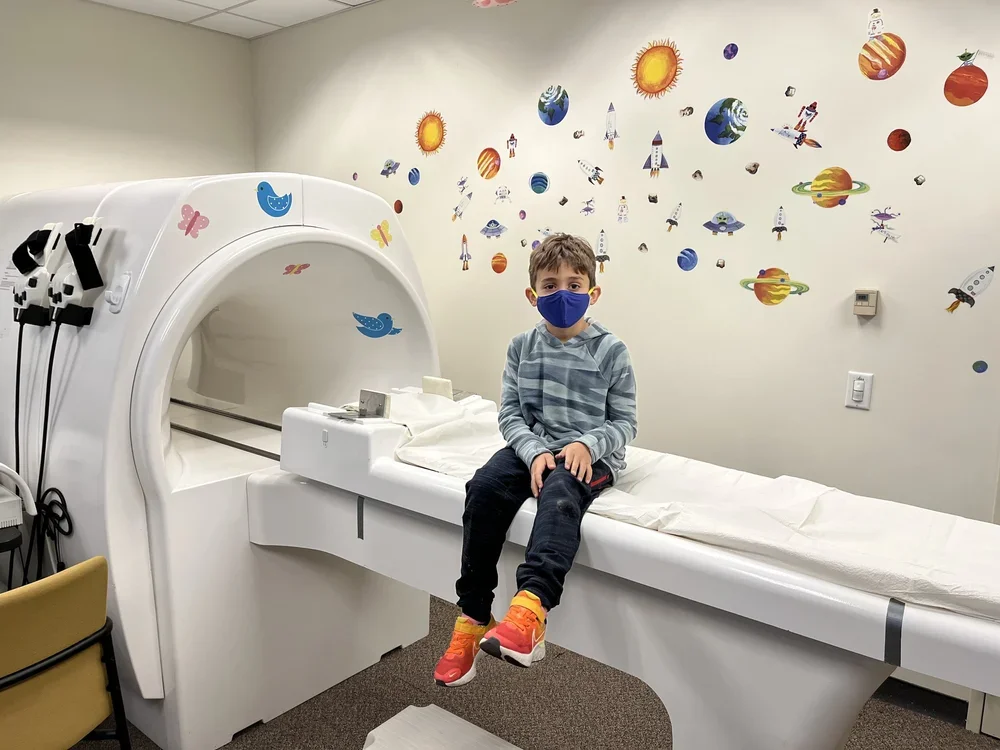
The CALC Study seeks to further explore this link through Magnetic Resonance Imaging (MRI) as well as language, math, and cognitive assessments. MRI is a safe and completely non-invasive method that we use to take pictures of the brain! To learn more about MRI, please visit our MRI Safety page. The purpose of the study is to use these methods to track the development of the reading and math networks in children over four years, beginning in kindergarten, to investigate how early brain differences in people at familial risk for reading and math difficulties manifest.
Relevance
This study has the potential to provide a model for understanding developmental learning disabilities, their underlying mechanisms, and their co-occurrence. This, in turn, could inform more effective development of early screening, diagnostic, and intervention tools.
-
Background
Research has shown a genetic link in the development of dyslexia, with children who have a family history (at least one first degree relative, such as a parent or sibling, with a diagnosis) at a higher risk than children without a family history.
Our Study
The BabyBOLD Study seeks to further explore this line of research through magnetic resonance imaging (MRI) as well as reading, language, and cognitive assessments. The purpose of the study is to use these methods to track the development of the reading network in children at three time points: infancy, toddler-age, and preschool-age to investigate how early brain differences in people at familial risk for dyslexia manifest.
Relevance
This has the potential to inform more effective prevention and treatment strategies for susceptible children before they go through certain crucial stages of brain development in the first two years of life!
-
Background
Reading disabilities, including dyslexia, are commonly not identified until a child has repeatedly failed to learn to read, which can have deleterious effects on their academic, vocational, and mental health outcomes. Early pre-literacy skills have been identified and reliably predict reading difficulties as early as preschool, when early intervention is most effective. However, early pre-literacy screenings are currently not implemented in pediatric practices.
Our Study
So far, we have conducted a pilot study with the eventual goal of validating the SPRouT-D, a pediatric literacy-risk screener checklist developed in our lab. The next step of this project will be conducting a full-scale validation and implementation study of the SPRouT-D in a pediatrician setting. This will help us to identify strategies for implementing early risk identification in pediatric practices, empowering physicians to treat, educate, and advocate for at-risk patients.
Relevance
This project has the potential to establish the first pediatric literacy-risk screener of its kind, making literacy-risk screening more accessible to the general public and allowing for the early identification of potential future reading difficulties.